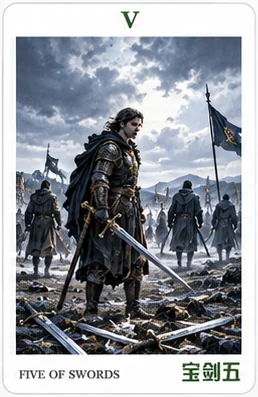
Five of Swords宝剑五
Air element: thoughts, communication, conflict, decisions
- Upright
- conflict, strife, winning at all costs, tension, discord
- Reversed
- reconciliation, ending conflict, guilt, remorse, making amends
What this card is about
The Five of Swords depicts a figure holding three swords with a smug yet weary expression, while two others walk away in defeat under a sky of ragged clouds. Swords represent thoughts and conflict, and the number five suggests instability and loss, hinting at a battle where no one truly wins.
Upright, this card often points to conflict, strife, and the drive to win at all costs. In relationships, it may show up as arguments that leave both parties wounded or as power struggles; at work, it can indicate fierce competition or cutthroat tactics; personally, it invites you to examine whether your attachment to being right is costing you peace of mind.
Reversed, the Five of Swords can signal reconciliation and the end of conflict, but it may also carry guilt or lingering resentment. It asks you to reflect: what have you sacrificed to win an argument, and was the victory worth the price?
Updated 2026-10-01
Meaning by situation
Five of Swords · In love and relationships
In love, the Five of Swords upright often shows verbal arguments or cold wars, where both sides may dig in. You might feel tired or wronged, but notice if you're also using attack or silence to protect yourself. Reversed, conflict may ease, or you begin to reflect on your part and try to communicate. Whether upright or reversed, focus on your own needs: do you want understanding or boundaries? Try expressing feelings without blame, and observe how your partner responds.
Five of Swords · At work and in your career
At work, the Five of Swords upright may indicate disagreements, competition for resources, or pressure. You might feel targeted or want to win an argument, but winning a debate doesn't necessarily win cooperation. Reversed, tensions may ease, or you're willing to let go of grudges and find common ground. In job searches or projects, avoid seeing colleagues as rivals; clarify your limits and what's negotiable. Note: this card doesn't predict hiring or salary outcomes, only how you might handle conflict.
Five of Swords · For personal growth
The Five of Swords invites you to notice your conflict patterns: do you habitually fight to win, or avoid and retreat? Pay attention to moments when you feel you 'must win' or 'must escape'—fear or old wounds often lie beneath. Growth isn't about eliminating conflict, but learning to stay clear-headed in tension and choose when to hold on and when to let go. After an argument, ask yourself: what do I really want? Do my actions serve that goal?
Five of Swords · As advice
When the Five of Swords appears in an advice position, it suggests stepping out of the argument for ten minutes to cool down. Write down what truly matters to you, then choose one small action to ease tension, such as saying, 'I need some time to think.'
Using it in a reading
When Five of Swords comes up, ask yourself:
- In my last conflict, what did I really want?
- Am I making 'winning the argument' the goal?
- If I let go of winning, what small action could improve things?
Then read it with its position and neighbours; the whole spread refines a single card.
Common questions about Five of Swords
Is the Five of Swords good or bad in love?
It's neither; it highlights conflict or competition. Use it to reflect on communication, not to predict the relationship's fate.
What does the reversed Five of Swords mean?
Reversed often suggests easing conflict, willingness to reconcile, or feelings of guilt and reflection. It points to letting go of fights and repairing.
What should I do when the Five of Swords appears?
Tend to your emotions first, then decide whether to communicate. Avoid decisions in the heat of anger; express your needs calmly.
Real readings that drew this card
More examplesMore from Swords
Tarot offers reflection; card meanings are not a promise of any outcome.